 |
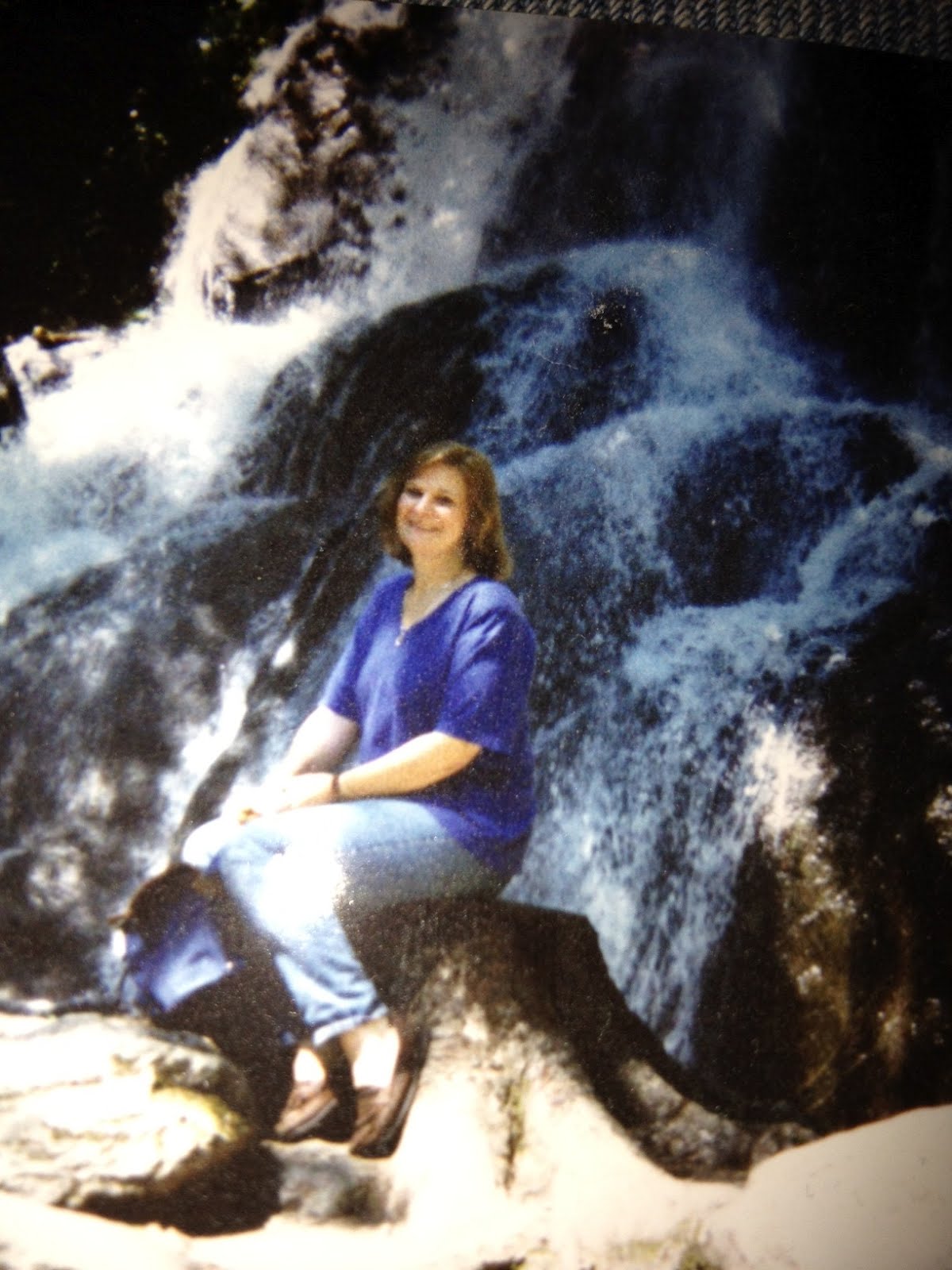
| I took this shot of Valerie when we were on Vacation somewhere in New England. |

For Valerie - Our Journey With Early Onset Alzheimer's Disease
Wednesday, May 2, 2012
Somewhere in New England

Sunday, February 12, 2012

Thursday, July 7, 2011
Saturday, May 28, 2011
Friday, May 27, 2011
She Remembered Today

While we were watching the news this morning, Val heard the date, May 27th. She turned to me and said, we got married today. She remembered. We were married on May 27th, 1995. Her remembering was a gift to me as last year, she did not remember our anniversary. It only seems like yesterday to me that we met and got married. One day during our honeymoon, we spent a wonderful day in Paris. It was an amazing day. No matter what happens, we'll always have Paris. ;>)
Thursday, May 12, 2011
Valerie- Their Story Needs To Be Told
Valerie used to write articles for Woman’s World Magazine. She was always interested in writing about people (mostly about children's issues) who were different and needed help, or at least help them in raising awareness about their lives and conditions. Val would get up early in the morning before the sun was up and write these stories on her old word processor that she had set up in her kitchen. She would keep clippings of articles she came across and send them to Woman's World Magazine. She felt very strongly about telling their stories.
Feb. 1, 1996
TO: Woman’s World
RE: Story Idea
Asperger’s Syndrome is a developmental disorder which falls into the autism spectrum. According to the Asperger’s Syndrome Support Network, the typical person with this disorder ‘is a loner’ who never fits in because of eccentric behavior, peculiar ways of speaking and a lack of social skills.
I am attaching a copy of an article that mentions a married couple with the disorder. I think Mary Newport may have an interesting story to tell about living on the fringes of the world we all take for granted and what makes her marriage different(or similar) to the average Woman’s World reader.
Please let me know if you’re as interested in reading Mary’s story as I am in writing it.
Feb. 1, 1996
TO: Woman’s World
RE: Story Idea
Asperger’s Syndrome is a developmental disorder which falls into the autism spectrum. According to the Asperger’s Syndrome Support Network, the typical person with this disorder ‘is a loner’ who never fits in because of eccentric behavior, peculiar ways of speaking and a lack of social skills.
I am attaching a copy of an article that mentions a married couple with the disorder. I think Mary Newport may have an interesting story to tell about living on the fringes of the world we all take for granted and what makes her marriage different(or similar) to the average Woman’s World reader.
Please let me know if you’re as interested in reading Mary’s story as I am in writing it.
Wednesday, May 11, 2011
Polio - My Story (by Valerie Jane Michetti)
Valerie wrote the following essay on her experience of having Polio. She was diagnosed with Post-Polio Syndrome in 2002. Through all of this I want Valerie's voice to be heard. Part of that will be the videos of Valerie ,her writings and voice recordings. She is the only one who can tell us what it is like. It is not easy for her, so I will try to help her. Valerie would want to do this so that her experience can help others. That is what Valerie's life was all about, helping others. I only wish I was as good at it as she was. I'm not.
POLIO - My Story
Valerie J. Michetti
January 21, 2001
Polio got me when I was four years old. I woke in the middle of the night imagining Christine Maceda, the bully next door, sitting on my head, pressing it hard into the pillow. Years later accepted the more ridiculous explanation that a virus – something like the measles that spread from house to house throughout the parish - had left me heavy and numb in my bed. I could hear Mom and Dad talking, stirring their late night coffee, in the next room. When I tried to call out, my voice was a growl, like the cat when she cornered a mouse.
I’ve seen photos. There I am with the Cardinal and a crowd of nurses on the front page of the News. The camera’s flash reflected a shiny star off the brace on my right leg. I was adorable. Light brown hair, cut by my mother like a bowl around my head. My eyes look off to the side and downward, toward none of the smiling faces in the grainy frame of the shot. I wonder what I thought at that moment, if memory serves me or if my adult mind has inserted too much into that celluloid moment. Later, I remember hating all the attention, suddenly special and frightened by it. That’s what I remember at least.
My family talks about visits from ball players and politicians. They left dolls at the door of my isolation room, like flowers at a tomb. A candy maker from Bay Ridge made the three hour round trip from Brooklyn to deliver a chocolate kewpie doll, as big as me, although I could neither eat it nor touch it in my flat-on-my back state. I don’t remember any of them. Only the photos exist to prove the compassion of strangers, fully unappreciated by me. I only wanted to feel the touch of someone I knew, though they were always on the other side of the glass. Mom’s lips pressed in kisses against the glass.
In fact, I was newsworthy only because I was an atrocity, the tommyknocker banging on the windows of unsuspecting children as they lay in their innocent beds. I was evidence of the imperfection of medicine and miracles, the child who got the shot that would end the dying and the shriveling of legs and arms, and still, I got IT. Me and a handful of others across the country. And, so, we were visited and photographed and all the more pathetic for the irony of the situation.
I suppose my parents needed to believe that it wasn’t all that bad for me, might have even been fun if I just paid more attention to the attention I (we) were getting. But I remember the dead weight of my own body. I remember the shining steel monster that spewed steam and hot towels, pushed into my twilight room by masked and robed women, and straining to understand the whispering words just beyond my hearing. I remember the steaming towels wrapped tightly about my body, over and over again, day and night. I remember little else of months in a hospital besides the smell of the steam and the touch of the masked nurses who held me close for a moment in my hot wrapping on lonely nights, the wrapping that kept my limps limber and prevented the wasted muscles that left other victims on crutches for life. The crisp, starched cotton of the nurses uniforms and the nun’s habits were my only physical contact. The scent of fresh cotton and steam lulled me to sleep at night and brought breakfast in the morning. It felt a million miles away from home on Sunset Avenue.
The day I came home the whole block turned out to watch Dad carry me into the house on his shoulders, my brace swinging perilously close to his square jaw. I could tell he and Mom were happy to have me home, but they were strangers to me, really. All those months alone. I had already decided that I could live without what I couldn’t have.
Mom relished the attention. The lone Irishman in a village of Neapolitans and Calabrese, this was the first warmth she’d felt from most of the other mothers. Even the dark Newcombes with their aunts and uncles and cousins in the cluster of houses behind the convent were more welcome. Mom hated New York City and being consumed by Dad’s loud Italian family, and said so. She tried to tell the other women about the land upstate her family farmed and the better life she lived up there. Women who had boarded ships to a new country and would probably never see their parents again had no sympathy for her.
We had no money but food and pity arrived at the door every day for weeks after I left the hospital. The good women of the church appeared to clean the house so Mom could get a break from caring for the quiet invalid. Thirty years later Uncle Ray remembered me as “a creepy little girl.” Smiled but seldom spoke. Still, I was a better candidate for sympathy than Didi, my four year old mongoloid sister. Most of the neighbors thought she should be put away. Her eyes looked directly into the camera, like she didn’t know she was different.
I had no idea what was going on, why I was suddenly different from the other kids on the block. I sat quietly, smiled when spoken to, and stood tentatively when ordered to show off my balance on the steel frame around my right leg. Visitors came smiling and left dabbing at their tears, grateful that their children had neither swam in polluted water nor shared a Coke with an infected person, proud that they loved their children enough to protect them from the life of the deformed.
I can’t say that I fought my way through adversary to become whole. I was five years old. What could I have known? I knew that children hated me for being slow on my feet, parents feared me (she has polio; I would be contagious for life), and the nuns thought I was being pampered right into the devil’s lair. There’s evil below the cheerful wrapping of good intentions.
Who knows why I tried to walk unbraced one day, and again the next, and the next until I jerked, hobbled, and finally walked with my lopsided, pigeon-toed gait across our tiny living room. I think I was tired of carrying so much weight. For weeks I walked when no one was near, enjoying the deceit of flopping softly onto the floor when I heard footsteps approach. I knew I had let them down.
So, what am 1? Victim or survivor? It’s complicated because I not only survived, I was – alleluia - healed. I was one of the lucky ones, they all said. Sister Kenny had discovered that steam and exercise saved limbs from atrophy. Some of us who came late to the epidemic would cast off our leg braces. Another call for press coverage. Visiting Nurses visited. My right hip considered the one inch gap between foot and floor and compensated. The limp disappeared but left a constant ache. If it doesn’t show, it doesn’t matter. None of what happened mattered except for the walking. It wasn’t a miracle. I was a miracle.
Only a few people know today that I’m a cripple. All those days of being too slow for play taught me how to watch. I can recognize my fellow survivors but they can’t see me. Polio made me invisible as a child, the way nurses and doctors, even loving family, will talk in front of a patient as if the illness has left him deaf, mute, and blind. I became a chameleon clinging to the wall, hiding behind the hues and shadows of the floral wallpaper. Surviving Polio was the best thing that happened to me.
I’m not complaining. I’m too well blessed in my salvation to be entitled to complaints. But I’ve never walked in public without consciously turning my right foot away from my left, pulling with every step against the gravitational pull of a muscle that won’t give up. The Tenacious Tendon. A good name for a bad steak house. Don’t think this conscious effort comes at an economy of guilt, for as natural as this adjustment of gait is to my day, so is the knowledge that it is a small price for what I might have suffered. Each time I see a woman drag a leg behind, or hear a man struggle with a palsied voice to be understood in a shop, I become Job with a cellphone dialing 1-800-YmeOGod. Cursed or blessed makes no difference. In the randomness of choice, selection, fate, or the fancy of gods, it’s always “Why me?”
It only makes sense that if I am a cripple, and yet look so average, then so are “they” in ways I will never know, unless I watch. And listen. I am still slow, which is why I hurry so much, walk so fast, fill my days, think ahead of every small obstacle to overcome. Yet I am approachable, because I appear aimless and calm in my wanderings. The Simon and Garfunkle notion of perfection: no deeds to do, no promises to keep. I’m groovy. This is my secret. People sense it. If they think you have time to listen, and you appear harmless, they will tell you anything. So they tell me things they never should and later wonder why they did. It’s why I know so much about people and struggle to understand it all. The pieces aren’t always in context, you see. It takes some shaking of the kaleidoscope to see the shapes clearly. Even then, the fragments shift constantly, always demanding further analysis.
These gifts came from a childhood propped in corners of rooms listening to people talk around me. It took decades for me to see where this and that phrase screamed in anger or sobbed in despair converged into a revelation. People whisper their secrets to strangers because they beg to be told. And there are so few willing to listen. Even my friends brag, “I’m not one for small talk.” Poor things. The universe is in the details.
My name is Jane, created by Valerie as an observer of her other characters. I’m the main character, and the only character who is interested in the stories the rest of the group tell. Still, I’m not so smart to see the connections until they hit me in the face. Valerie trusts me to manipulate people to do what she wants, and lets me get as bitchy as necessary keep someone in line. I worship at the altar of Aretha Franklin – “Gotta make the best of a bad situation and find a good reason to keep on keeping on.”
Subscribe to:
Posts (Atom)